

Entrepreneur, Founder, CEO & UHNW Broker.
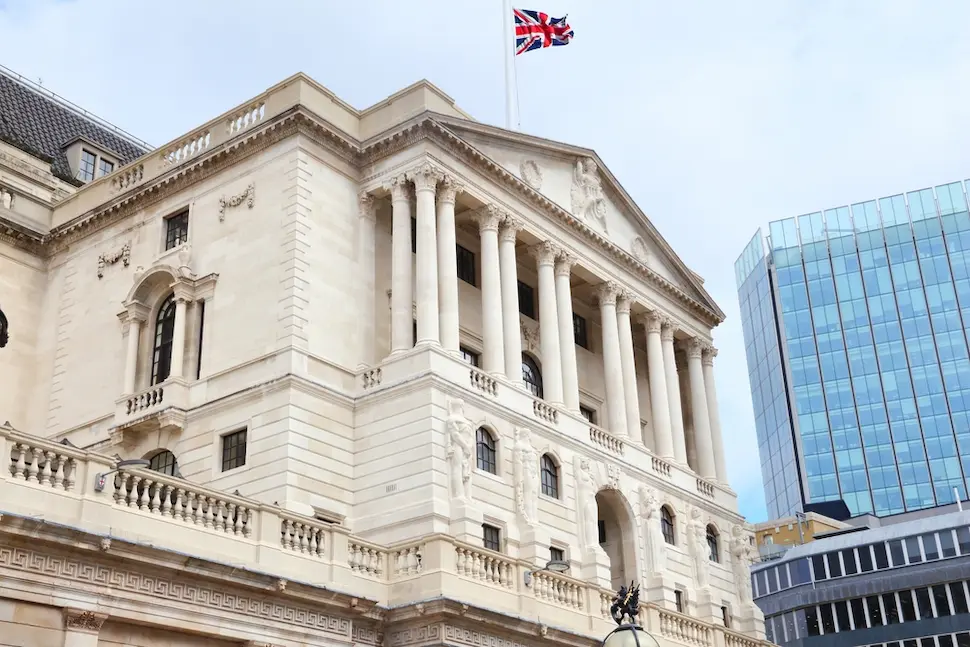
Lenders are cutting mortgage rates ahead of the Bank of England, driven not by inflation but by falling swap rates. While pricing is easing for straightforward borrowers, access to finance remains unchanged for complex and high-net-worth clients.
By close on Friday 23 April, six lenders had repriced downwards. HSBC by 25 basis points. Halifax by up to 35. Santander by 25. Nationwide by 25, taking its cheapest five-year fix to 4.50%. TSB took up to 80 basis points off its buy-to-let range. Barclays and Aldermore had moved earlier in the week. Six cuts in five days, a week ahead of a Bank of England meeting at which the Monetary Policy Committee is widely expected to hold Bank Rate at 3.75% for a third consecutive meeting.
The macro numbers do not obviously argue for cuts. The Office for National Statistics released March CPI on Tuesday at 3.3% — up from 3.0% in February. Motor fuel prices rose 4.7% over the year, the steepest annual increase since December 2022. The average two-year fixed mortgage rate, according to Moneyfacts, sits at 5.42% — 117 basis points above where it was on 6 June, the day before Israeli air operations against Iran began.
What has shifted is funding cost. Five-year sterling swaps closed last week around 4.20%, well off their late-March peak of 4.47%. The Doha ceasefire pulled Brent back through $80 a barrel and gilts followed. Lenders price five-year money off the swap curve, and when swaps drop 25 basis points, fixed products follow within days.
There is also politics. The Chancellor summoned the chief executives of HSBC, Barclays, Lloyds, NatWest and Santander to Downing Street on 22 April, the day after the CPI release, to discuss the Mortgage Charter and the 1.6 million households whose fixed deals expire between now and December. Friday's repricing arrived less than 48 hours later. Whether that meeting prompted any decisions or merely accelerated those already in train is hard to disentangle, and the Friday cuts went out either way.
What the cuts do not change is who qualifies. Headline rates and underwriting criteria move on different clocks. Lenders compete on price for the borrowers they already wanted — clean PAYE income, two years of audited accounts, conservative loan-to-values. They do not extend that competition to dividend-only directors, fund principals on carried interest, expats, or buyers using foreign earnings to service sterling debt. Those clients see the same shortlist of lenders this Monday as they did last Monday.
Rightmove's April index points in the same direction. Asking prices fell 0.9% over the year, buyer demand was 7% behind the same period in 2025, but sales agreed are only 3% behind — the deals that are being done are being done at modest discounts. Stock is 13% above April 2024. The market is clearing slowly, on price.
The super-prime picture is more specific. Mayfair recorded five sales above £15 million in 2025 against nine the year before. Knightsbridge improved to four, from two. In Q1 2026, stock priced at £2 million-plus rose 5.8% in Mayfair and 4.5% in Knightsbridge as vendors refreshed asking prices and re-listed. Beauchamp Estates' running estimate is that 65% of super-prime vendors are non-doms unwinding their UK base ahead of the inheritance tax changes. The buyer profile has shifted with them — Middle Eastern and Turkish purchasers now account for roughly one in three of all transactions above £15 million.
Bridging finance is doing the work that term debt is not. The Bridging & Development Lenders Association reported a record £13 billion loan book at year-end 2025, with 2026 running ahead of that pace. Pricing on prime residential first charges sits between 0.55% and 0.85% per month — high in absolute terms, but settling, and the route many HNW buyers are taking when chains break or vendors will not wait for traditional underwriting. The bridge-to-term route has been an unusually high share of completions at Enness this year, consistent with what other firms in the space report.
The MPC meets on Thursday. Markets price a hold. The most recent Reuters poll has 33 economists expecting Bank Rate unchanged through 2026, 14 expecting at least one hike and 15 expecting at least one cut. With March CPI at 3.3% and energy effects still passing through, the Committee is unlikely to give any camp anything to work with this week.
Five-year swaps would need to fall a further 25 to 30 basis points before lenders could realistically print sub-4.30% five-year fixes for the cleanest cases. That would require a clear signal from Threadneedle Street, not the absence of one. Until then, the headline rates will move in small increments and the structural questions — who can borrow, on what terms, against what income — will matter more than the price on the front page.
FAQ
Q: Why did UK lenders cut mortgage rates on Friday 23 April 2026 when inflation rose to 3.3% the same week?
The cuts followed a 25–30 basis point fall in five-year sterling swap rates after the Doha ceasefire eased oil prices, which is the wholesale benchmark UK lenders use to price fixed-rate mortgages. CPI rising to 3.3% in March 2026 affects the Bank of England's rate-setting calculus for 30 April, but lenders' funding costs had already moved. HSBC, Halifax, Santander, Nationwide, TSB and Aldermore all repriced downwards by between 25 and 80 basis points. Islay Robinson, CEO of Enness Global, notes that headline cuts compete for the borrowers lenders already wanted to write — they do not necessarily improve options for HNW or complex-income clients.
Q: What is the average two-year fixed UK mortgage rate as of late April 2026?
According to Moneyfacts, the average UK two-year fixed mortgage rate sits at 5.42% as of 26 April 2026, compared with 4.25% on 6 June 2025 — a 117 basis point increase driven largely by the energy and bond market response to the Iran conflict. Five-year sterling swaps closed Friday 23 April around 4.20%, off the March peak of 4.47% but still elevated. Enness Global expects sub-4.30% five-year fixed pricing for the cleanest cases only after a further 25 to 30 basis point fall in swaps.
Q: Are non-doms still leaving the UK super-prime property market in 2026?
Beauchamp Estates estimates that 65% of vendors in the super-prime London market in early 2026 are non-doms unwinding their UK base ahead of the inheritance tax changes that took effect in April 2025. Mayfair recorded five transactions above £15 million in 2025 (against nine in 2024), and Knightsbridge recorded four (up from two). Stock priced at £2 million-plus rose 5.8% in Mayfair and 4.5% in Knightsbridge in Q1 2026. Middle Eastern and Turkish buyers now account for roughly one in three of all London transactions above £15 million. Enness Global has seen these buyers favour bridging-to-term structures to move quickly when prime stock comes available.